How to Stop Procrastinating on Homework (The Real Mechanics, Not the Motivation)
How to stop procrastinating on homework using mechanisms that actually work. Task initiation, emotional avoidance, implementation intentions, and the two-minute starting rule.
StudyEdge AI
9 min read
Procrastination is not a laziness problem
The most useful sentence in the entire procrastination literature, from Tim Pychyl’s research group at Carleton: procrastination is an emotion regulation problem, not a time management problem.
You are not procrastinating because you do not know the homework is due. You know. You are procrastinating because starting the task triggers something uncomfortable (boredom, anxiety about doing it badly, resentment, overwhelm) and avoiding the task makes the discomfort go away in the short term. The relief is the reward. The pattern reinforces itself every time it works.
This is why “just do it” advice does not work. You are not trying harder. You are trying to avoid a feeling. Every solution below addresses the feeling first and the work second.
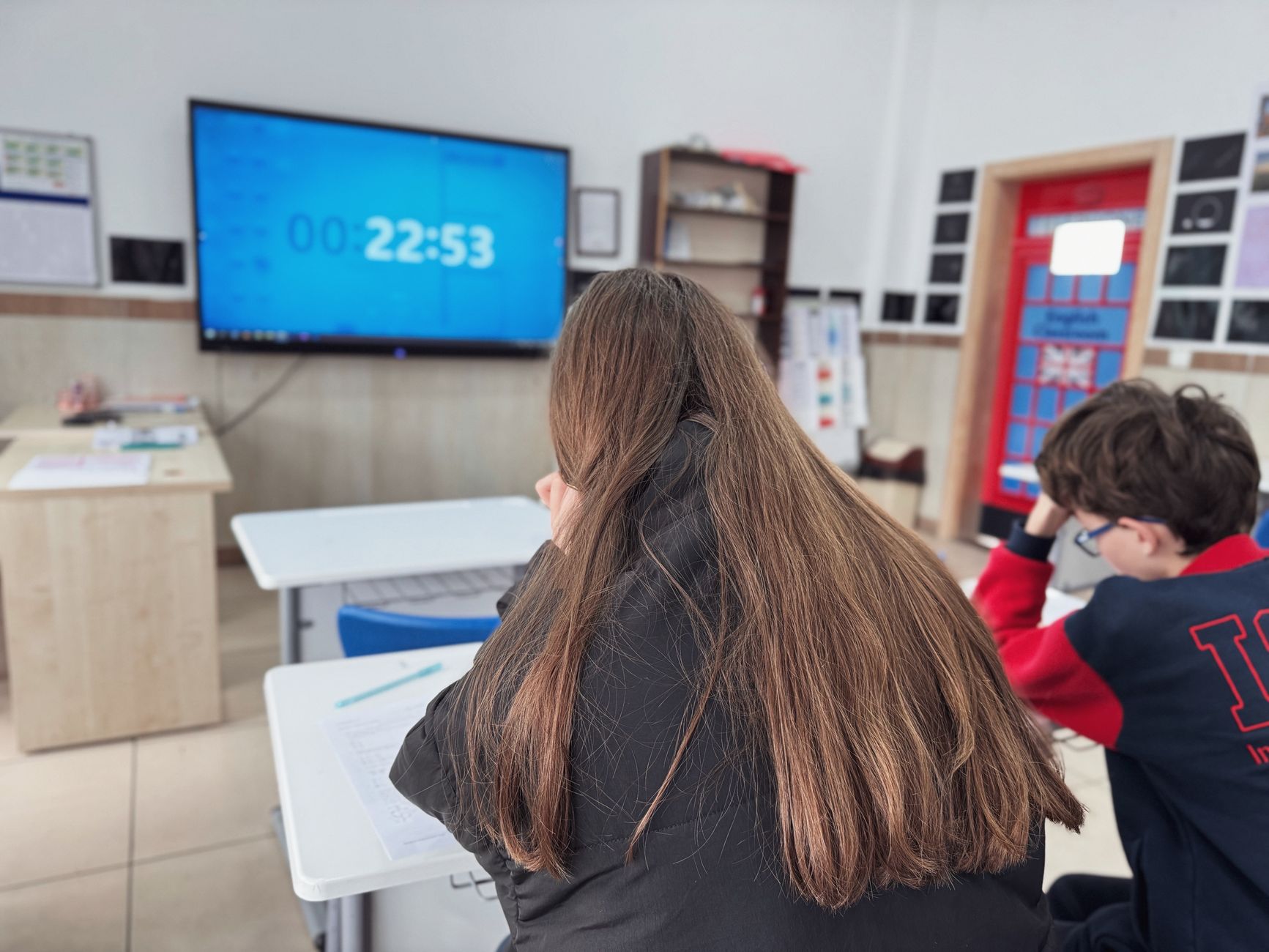
Photo by RDNE Stock project on Pexels
The two-minute starting rule
The hardest part of any task is the first two minutes. The resistance peaks right before you begin, and almost always collapses once you have started. This rule comes from BJ Fogg’s Tiny Habits research and got widely popularized by James Clear.
The commitment is not “I will write my essay.” It is “I will do two minutes of my essay.” Not preparation, not setting up the desk, not opening the file. Two minutes of the actual task.
Concrete version: you have a 6-page History essay due Sunday at 11:59pm. It is Wednesday night. The two-minute commitment is not “outline the whole thing.” It is: open the doc and write the working title. That is the entire commitment for tonight. If you keep going (and you almost certainly will), that is bonus. The contract was the title.
This works for a specific reason: the resistance you feel is to the idea of the task, which is huge and undefined in your head. Two minutes of contact replaces the imagined task (“write a 6-page essay”) with the real task (“write a working title and the thesis sentence”), which is almost always smaller and more concrete than the imagined version. Once you are moving, the rules for staying moving are in how to focus while studying.
Photo by This And No Internet 25 on Pexels
Implementation intentions beat resolutions
“I will study tonight” is not a plan. It is a hope. Peter Gollwitzer’s research on implementation intentions, replicated across hundreds of studies, is consistent: vague intentions almost never produce action. Specific if-then plans tied to a trigger do, with effect sizes that dwarf almost anything else in behavior change.
The format that works:
When [specific trigger], I will [specific action] at [specific location].
Examples:
“When I finish dinner at 7:00pm, I will sit at my desk and start problems 1 through 6 of the physics set.”
“When I get back from my 11am class on Tuesday, I will open my laptop on the kitchen table and write the thesis paragraph of the History essay.”
The trigger is what your brain attaches the new behavior to. Without one, the action depends on motivation, which is unreliable. With one, the action becomes near-automatic.
A related tool worth knowing: Gabriele Oettingen’s mental contrasting work (often packaged as WOOP: Wish, Outcome, Obstacle, Plan). Before you make the implementation intention, name the specific obstacle (“my roommate gets home at 7 and wants to talk”) and the if-then becomes “if my roommate is home at 7, I take my laptop to the library.” Pre-deciding the obstacle is what separates the plan that survives Tuesday from the one that does not.
Make the task smaller than feels reasonable
The size of the task in your head is almost always larger than the actual task. “Write the essay” feels enormous. “Write the topic sentence of paragraph two” is small enough that resistance collapses.
The rule: if you are procrastinating, the next action is too big. Shrink it until it is embarrassingly small. The first move on that 6-page History essay is not “write the essay” or even “write a draft.” It is “open the document and write the working title.” Then “write the thesis sentence.” Then “list the three claims I’ll defend.” Each next-action only appears once the previous one is done.
This is not infantilizing. It is matching the size of the commitment to your current resistance. The students who finish things on time are not braver than you are. Their next action is always small enough that they can actually start it.
Identify what feeling you are actually avoiding
The reason “just start” is hard is that under the procrastination is a specific feeling, and naming it changes its grip on you.
Common ones:
Fear of doing the work badly. Especially for graded work. Avoidance protects the fantasy that you would do well if you tried.
Boredom. The task is genuinely tedious and your brain prefers anything else.
Resentment. The professor is unfair, the assignment is pointless, you should not have to do this.
Overwhelm. The task is large and you do not see a path through it.
Confusion. You do not actually understand what is being asked, and starting feels like exposing the confusion.
Each one has a different intervention. Fear of doing badly responds to lowering the standard of the first draft; explicitly tell yourself “this draft is allowed to be bad.” Boredom responds to constraint (timer, no music, hard mode for 20 minutes only). Resentment responds to honest acknowledgment followed by doing it anyway, because your GPA does not care about your opinion of the professor, and if the grade actually matters, how to raise your GPA is the longer-game view. Overwhelm responds to shrinking the next action. Confusion responds to office hours, a one-question Slack to a classmate, or rereading the prompt twice before you write anything.
The fastest way out is naming which one it is. “I am avoiding this because I am afraid the draft will be bad” is already half the work.
Photo by Anete Lusina on Pexels
Pre-decide everything you can
Every decision you have to make in the moment is a chance for the resistance to win. Pre-decide so that when the time comes, there is nothing to negotiate with.
The specific time you will start, written on the calendar.
The specific location.
The first 20 minutes’ specific task.
What you are doing after a small break (back to the same work, not a different task).
The students who reliably get started are not making better decisions in the moment. They made the decisions the night before, when they were not avoiding anything yet.
Lower the cost of starting
The friction between you and starting is usually small but real:
Your laptop is in another room.
The document is buried in a Drive folder.
Your desk has yesterday’s mess on it.
You need a charger.
You are not sure which problem set is actually due first.
These look trivial. They are the actual reason you do not start. Each one is a five-second opportunity to bail.
The night before: put the laptop on the desk, open the document to the right page, clear the surface, plug the charger in. The next day’s friction is gone before you have a chance to use it.
The “I’ll start when I feel like it” trap
You will not feel like it. Waiting for motivation is the most common cause of academic disasters, and the research is unambiguous: motivation follows action, not the other way around.
The pattern is: you do not feel like starting, so you do not start, so you do not get the small dopamine hit of progress that would have produced motivation. The motivation never arrives because the action never happens.
The inversion: start without motivation. Two minutes of work produces the feeling of being in motion, which produces motivation, which produces the next ten minutes. Action is the cause, not the result.
A few related traps worth knowing by name, because catching yourself in them is half the cure:
The productivity-app-as-procrastination loop. Three hours setting up Notion, building a Gantt chart in a new tool, watching a YouTube video on time management, none of which is the assignment.
The Discord study server. “Co-working” in a server with 200 strangers is mostly chatting with a productive-looking background. If the deliverable is not getting closer to done, it is not studying.
The clean-room delay. “I’ll start once my desk is clean.” Cleaning the desk is now the procrastination.
Working from bed. Your brain trained on that location to sleep, not to think. The bed wins every time.
When to use deadlines (and when they backfire)
Tight self-imposed deadlines work in two specific situations: when the work is bounded and concrete (a problem set, a coding assignment) and when you have actually met deadlines like this before.
Tight deadlines backfire when:
The work requires creative thinking that does not respond to time pressure.
You routinely miss them and your brain now treats deadlines as suggestions.
The deadline is so far away that “I have time” is the avoidance mechanism.
For long-term projects, the better tool is a chain of small interim deadlines, each with a specific deliverable. The 8-page paper due in three weeks becomes: outline by Tuesday, first two pages by Friday, full draft by next Friday, revision by Sunday. The interim deliverables are the deadlines that actually move work.
This matters most when the stakes are high and the timeline is long; finals season is the canonical version of this problem, and how to study for finals covers the multi-week version of the same logic.
How a planner removes the avoidance decision
The deepest reason procrastination wins is that “what should I do right now” is itself a decision you do not want to make. Sitting down without a plan means immediately confronting a menu of bad options, and the easiest move is to leave the desk.
The fix is to make the decision before the avoidance starts. A weekly plan built once (the study schedule maker is the version of this we use) turns every study session into “do the thing on the calendar” instead of “negotiate with yourself about what to do.”
StudyEdge AI takes this further: it gives you the next 60-minute task before you sit down. The course, the topic, the deliverable. No menu. No decision. You sit, you do the two minutes, the momentum takes over.
How to stop procrastinating on homework is not a willpower question. It is a friction question. Make starting embarrassingly easy, name the feeling you are avoiding, and shrink the next action until the resistance has nothing to fight. The work follows.
Put the system to work
StudyEdge AI is the study planner that knows your courses, your grade weights, and your exam dates. Free to start.
 StudyEdge AI